
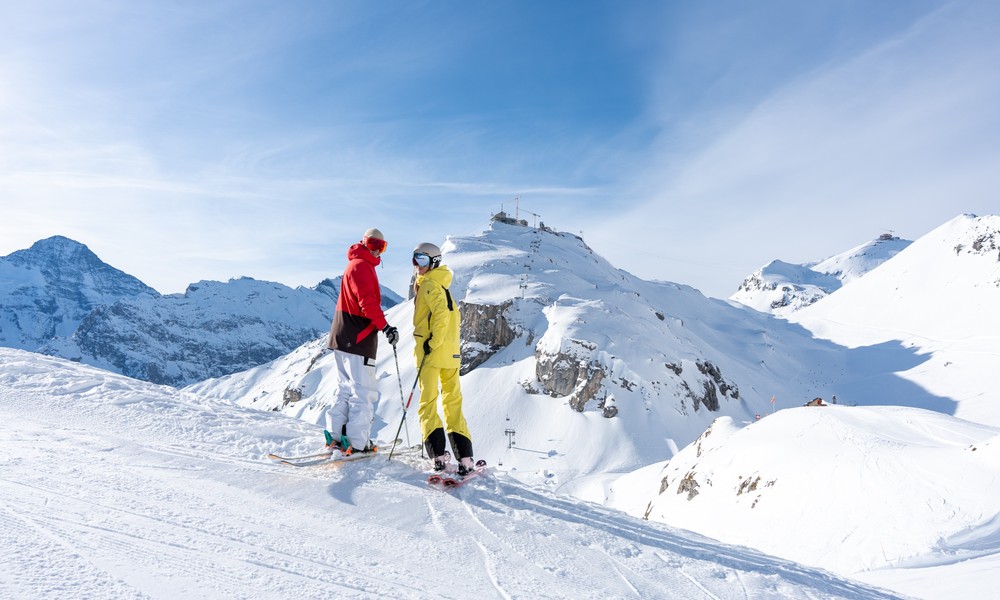
Tignes doesn’t win beauty contests. There are no charming cobblestone squares, no medieval church steeples, no winding lanes of boutique shops. What Tignes has instead is arguably more important to a skier: year-round skiing on a glacier, extraordinary snow reliability, and direct access to one of the most exciting ski areas in Europe.
If you’ve been considering chalet tignes for your next ski holiday whether a week in January or a late-season powder hunt in April, here’s what you need to know.
A Brief History
Tignes has a history more dramatic than most ski resorts dare to claim. The original village of Tignes was deliberately flooded in 1952 to create the Lac du Chevril reservoir, displacing the entire community. The modern resort was built above the flood line in its place, which goes some way towards explaining why it looks the way it does.
In a poetic twist, during the drought of 1989, the water level dropped enough to expose the old church tower. The remains of the original village can still occasionally be glimpsed in periods of very low water.
The resort you ski today is split across several distinct neighbourhoods at different altitudes, each with its own character.
The Different Villages
Tignes Val Claret (2,100m)
The highest of the Tignes villages and the most purpose-built in appearance. Val Claret sits directly beneath the Grande Motte glacier and offers some of the most convenient ski access in the area. It’s functional rather than beautiful, but its position gives it genuinely excellent snow conditions.
Tignes le Lac (2,100m)
The main hub of the resort, with the best selection of shops, restaurants, and bars. The iconic frozen lake at its centre becomes a social hub in winter, with ice skating, ice karting, and various events taking place on its frozen surface throughout the season.
Tignes Les Brévières (1,550m)
The lowest and most charming of the Tignes settlements. Les Brévières has retained far more traditional alpine character than the higher villages, with stone buildings and a genuine village feel. It sits at the bottom of the Col de la Sachette run, one of the longest vertical descents in the ski area and is a favourite destination for a long lunch halfway through a ski day.
Tignes Val Tarin and Les Boisses
Smaller residential areas without significant resort infrastructure, popular with families and those seeking quieter accommodation options.
The Ski Area: Espace Killy
Tignes is linked with Val d’Isère to form the Espace Killy ski area named after Jean-Claude Killy, the French skiing legend who grew up in Val d’Isère and won three gold medals at the 1968 Winter Olympics.
The combined area covers:
- 300km of marked runs
- 154 pistes (46 green, 56 blue, 65 red, 23 black)
- 78 lifts
- Skiing from 1,550m (Les Brévières) to 3,456m (Grande Motte glacier)
You can access Val d’Isère in about 20 minutes from most points in Tignes via the interconnecting lifts and pistes. The two resorts share a single lift pass.
The Grande Motte Glacier
The glacier is Tignes’ trump card. Accessed via a funicular from Val Claret that burrows directly through the mountain to the glacier, the Grande Motte offers skiing at altitudes between 2,700m and 3,456m.
The glacier is open year-round, including July and August, which makes Tignes one of very few European resorts to offer summer skiing. In winter, the glacier provides a reliable top section even when the rest of the Alps is suffering from warm spells.
The terrain up here tends to be wide, open, and relatively mellow at the top, becoming more demanding as you descend. The views across the Alps from the summit are extraordinary on a clear day you can see as far as Mont Blanc on the horizon.
Terrain Highlights
For Beginners
Tignes has dedicated beginner areas in Val Claret and Tignes le Lac with free beginner lifts and wide, gentle slopes. The resort has invested in making ski school easy to access, and BASS (British Alpine Ski School) and ESF both operate here.
Honest assessment: Tignes is not primarily a beginner resort. If you’re a complete novice and want the most nurturing environment, a lower-altitude resort with more tree-lined, confidence-building terrain might suit you better for a first trip. But if you want to learn to ski and then immediately have access to world-class terrain as you progress, Tignes is excellent.
For Intermediates
The bulk of Tignes’ terrain suits the confident intermediate skier perfectly. Wide red runs like the Trolles and the Panoramic give long, sweeping descents with enough gradient to feel exhilarating without being terrifying. The runs from the top of the Aiguille Percée across to Les Brévières offer some of the resort’s best sustained intermediate skiing.
For Advanced Skiers and Snowboarders
This is where Tignes truly shines. The resort has a long history of extreme skiing and snowboarding events – the Tignes Swatch Nines was a renowned freeride event that drew the world’s best riders to its purpose-built features.
Key highlights for advanced skiers:
- The Sache face: A steep, sustained black run down to Les Brévières with excellent off-piste opportunities on either side
- The Couloir de Palet: A classic off-piste descent accessed from the Col du Palet
- The Expert Zone: Tignes maintains a permanent freeride zone with marked but unpisted terrain
- The Ramp and other snowpark features: Tignes has one of the best snowparks in France, with kickers, rails, and a superpipe
Off-Piste
Tignes has some of the best off-piste terrain in the Alps, and the resort actively promotes and facilitates backcountry access. Key routes include descents from the Grand Vallon, the Col Pers, and – for those with appropriate experience and guidance, routes into the backcountry towards Bonneval-sur-Arc.
Always hire a qualified mountain guide for off-piste and backcountry routes, regardless of experience level.
Getting to Tignes
The most convenient airport is Geneva (GVA), approximately 2.5-3 hours by road transfer. Chambéry (CMF) is closer (around 2 hours) but has fewer direct international flights. Lyon (LYS) is also an option at around 3 hours.
Tignes can also be reached by train to Bourg-Saint-Maurice (on the Eurostar Ski Train from London St Pancras in winter), with a connecting bus or taxi up to the resort about 45 minutes from Bourg.
The road into Tignes the Route de Tignes from Bourg-Saint-Maurice passes through the Gorges de la Malpasset and can occasionally be affected by avalanche closures. This is relatively rare, but worth knowing if you’re arriving or departing in heavy snowfall.
Catered Chalets in Tignes
Tignes has a strong catered chalet offering, particularly in the Tignes le Lac and Val Claret areas. Unlike the wooden farmhouse chalets found in Val d’Isère, many Tignes chalets are within larger buildings but well-designed and comfortable properties provide the full catered experience with just as much warmth.
The genuine ski-in/ski-out access available from many Tignes chalets is a major practical advantage particularly for families or those who don’t want to worry about shuttles or walking to lifts.
When choosing a catered chalet in Tignes, pay attention to:
- Which village it’s in – Val Claret is most convenient for the glacier; Tignes le Lac for après-ski
- Lift access – ideally no more than a short walk or direct ski-out
- Room configuration – Tignes chalets vary from bunk-heavy ski-school accommodation to genuine luxury
What to Eat and Drink
On the Mountain
Several mountain restaurants deserve a mention:
- La Sache, midway down to Les Brévières, is popular for long lunches with good views
- Les Tufs in Tignes le Lac is reliable for a warming plat du jour
- La Falaise at the top of the Aiguille Percée cable car has arguably the best views of any on-mountain restaurant in the area
In the Resort
Tignes le Lac has the broadest selection. Highlights include:
- Le Caveau: A long-standing favourite for Savoyard fondue and raclette, with a lively atmosphere and good wine list
- Brasero: Good for grills and more international cuisine
- L’Arbina: Quality contemporary French cooking in a relaxed setting
Snowboarding in Tignes
Tignes is one of the most snowboard-friendly resorts in France. The terrain park in Val Claret (the Spot) is consistently rated among the best in Europe, with well-maintained features across beginner, intermediate, and expert lines. The natural terrain bowls, natural hits, cliff drops are exceptional for freeriding.
The resort has hosted numerous World Snowboard Tour and Freeride World Qualifier events, and the local snowboarding culture is strong.
Best Time to Visit
|
Month |
Snow Conditions |
Crowds |
Atmosphere |
|---|---|---|---|
|
December |
Variable; glacier reliable |
Christmas peak week busy |
Festive, lively |
|
January |
Usually excellent |
Quieter, good value |
Relaxed |
|
February |
Excellent |
February half-term busy |
Very lively |
|
March |
Generally excellent |
School holidays busy |
Best weather/snow combo |
|
April |
Glacier reliable; lower runs softening |
Quieter |
Late-season relaxed vibe |
March is widely considered the best month for Tignes, longer days, typically excellent snow, good weather, and the resort starting to wind down means less queue pressure on lifts.
Final Verdict
Tignes is not the most beautiful resort in France. It doesn’t have the sophistication of Val d’Isère or the chocolate-box charm of Chamonix. But it is one of the finest ski destinations in Europe, with world-class terrain, unbeatable snow reliability, and a genuine passion for skiing and snowboarding at its heart.
For those who care primarily about quality and quantity of skiing and who want a base from which to access both the Espace Killy and, via Val d’Isère, a huge variety of mountain terrain – Tignes is hard to argue against.